
Leaders in higher education, including at local instititutions, are concerned over President Trump’s executive order Monday that suspends new visas for many international workers.
The order, passed Monday and put into effect immediately, denies entry into the U.S. to four visa categories: H-1B, L, J and H-2B. These visas apply to highly skilled workers, intra-company transfers within global corporations, “cultural exchange workers” like interns, teachers and camp counselors, and seasonal and short-term positions, respectively.
Many colleges use H-1B visas to hire faculty and scholars, and experts worry the limit will hurt universities’ ability to find international and diverse talent. They also fear, according to industry publications, the possibility of further changes to the optional practical training program (OPT), which allows international students to stay in the U.S. for three years after they’ve graduated. The order on Monday spared the OPT program.
At Carnegie Mellon University, leaders released a message to campus following the announcement of the executive order.
“We remain committed to our international students, faculty, staff and alumni as a critical foundation of our academic and research excellence,” the message read.
The message, written by J. Michael McQuade, vice president for research, and Provost Jim Garrett describes CMU as an “international university” that relies heavily on students and faculty from around the globe.
“We are aware that recent actions could have significant impacts on our community, and we are committed to keeping you informed as we learn more about the implications of these measures,” they wrote.
Carnegie Mellon has a high population of international students and faculty. According to the university’s Office of International Education, 317 international students enrolled as undergraduates during summer and fall 2019. More than 1,600 enrolled as master’s students.
McQuade and Garrett assured readers that the university is “actively engaging in advocacy” for international students. They wrote that CMU leadership is working with local, state and federal leaders, as well as experts within the higher education sector. The university did not provide any specific examples of solutions or discussions in the works.
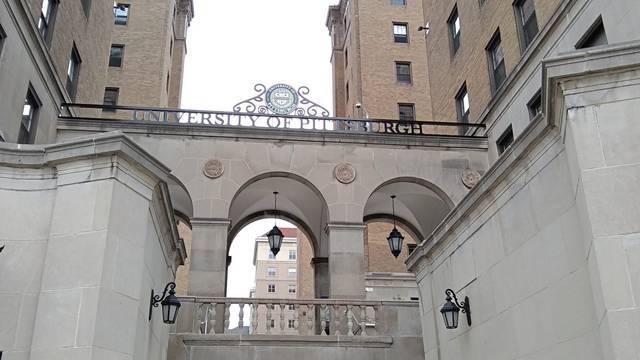
At the University of Pittsburgh, spokesman Pat McMahon said the university should not be affected by the executive order.
While some initially feared the restrictions to J visas – the kind that applies to teachers and interns – would affect grad students and visiting faculty, Pitt’s Office of International Students explains on its website that the restrictions do not apply to scholars, students, researchers or professors.
Additionally, visa holders that already have a stamp in their passport are exempted, and the order should have “minimal impact” to individuals already in the U.S., the website says.
Still, the Office of International Studies has said it would work with members of the community to “continuously advocate for a humane, fair immigration system in the United States.”
“While the announced provisions will have limited direct effect on the University of Pittsburgh’s international students, faculty and staff, its overall impact is concerning,” McMahon wrote in an email.