





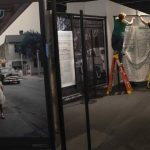



The building that housed the former Scotty’s Service Garage, an Esso gas station and car repair shop on Centre Avenue in the Hill District, is still there.
It was more than a place to take a car — it was a safe and welcoming space for African Americans.
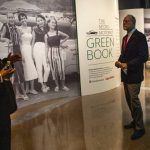
An image of owner Samuel “Scotty” Scott standing in front of it is one of the artifacts on display at the Senator John Heinz History Center’s newest exhibition, “The Negro Motorist Green Book.” The exhibit offers an immersive look at the reality of travel for African Americans in mid-century.
It opened Saturday.
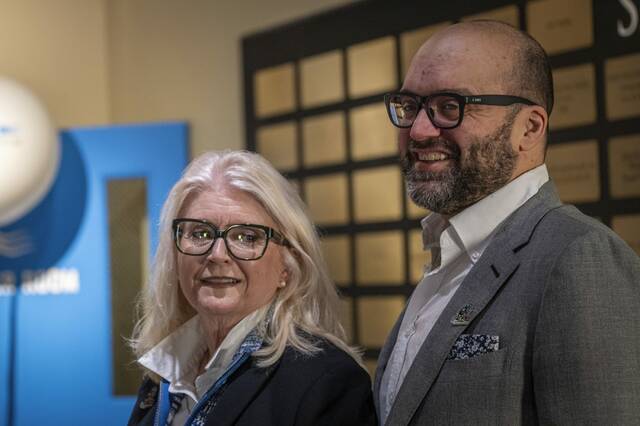
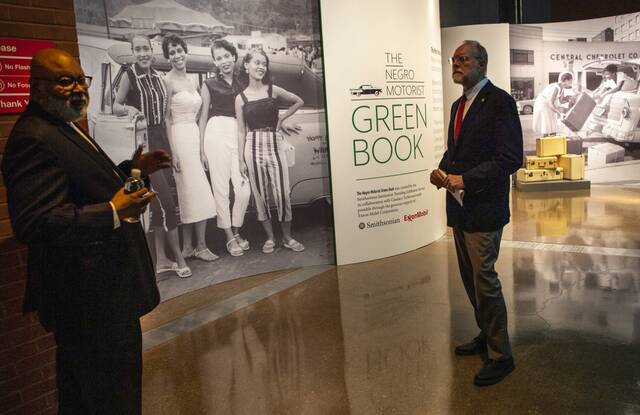
“Scotty’s is still there,” said Samuel W. Black, director of the African American Program at the history center in the Strip District during a media preview Thursday. “I don’t know if the current owners know of the connection, but if they don’t, we invite them to come to the exhibit.”
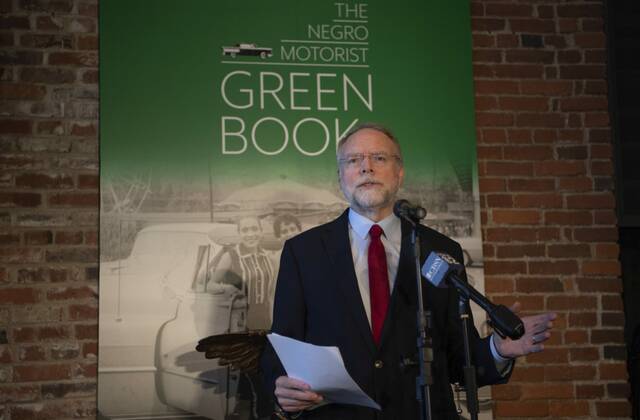
Scott was an entrepreneur who represented business owners whose companies were featured in the Green Book, said history center president and CEO Andy Masich.
The publication was developed in 1936 by Harlem postman Victor Hugo Green. It was printed and distributed nationwide for three decades, providing African Americans with a directory of restaurants, gas stations, department stores, and other businesses that welcomed Black travelers — including more than 30 businesses in Western Pennsylvania, such as Scotty’s.
The book cost 75 cents in 1948. Pittsburgh is listed in every issue from 1936-66.
“It was extremely dangerous to travel around this country for African Americans,” Black said. “That is no joke.”
The information was valuable during that time because it was the era of Jim Crow laws and “sundown towns” — communities that explicitly prohibited Blacks from being there or driving through at night.
“It is interesting that we call it a ‘travel guide,’” Masich said. “In many ways it was a survival guide for African American families traveling, especially in the South, but really throughout America. They needed to know where they could sleep, get a meal, get gasoline.”
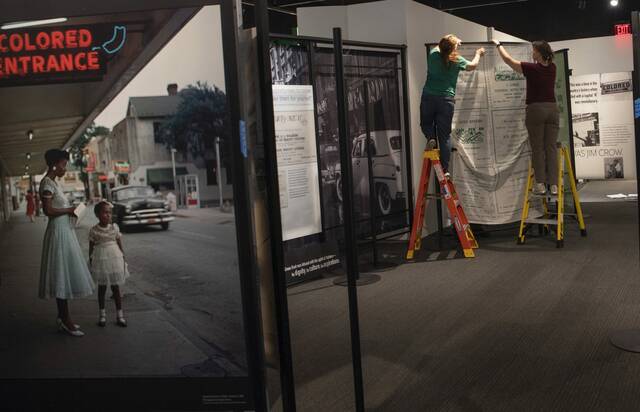
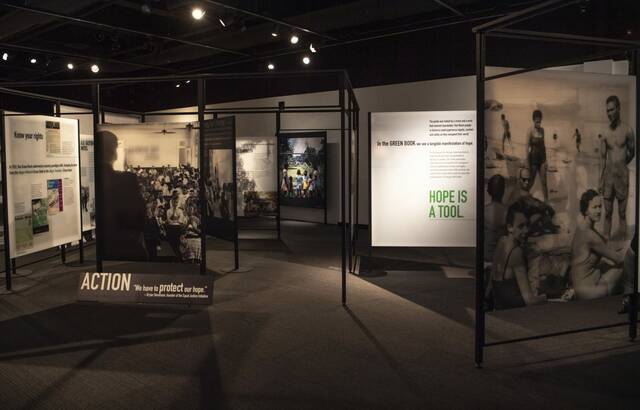
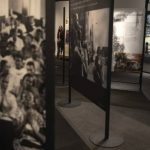
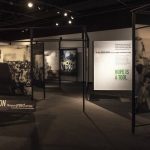
The exhibition features business signs, a vintage car, historic footage, archival images, and firsthand accounts from locals.
Many of them had “traveling strategies,” said Black, who with a team conducted interviews about traveling during that time. Clarence Curry told Black his dad would plan their route when they ventured to visit relatives, especially when traveling in the South.
Curry recalled his father changing license plates so that when traveling South they would be seen as locals, despite the legal risk.
Out-of-town travelers, especially those with nice looking cars and Northern license plates would be vulnerable to locals and their sheriffs, according to an article written by Black in the spring issue of the history center’s magazine.

The exhibit, a partnership with the Smithsonian Institution Traveling Exhibition Service, explores the story of the guide that helped Black travelers navigate the country safely, and with dignity, during the time of segregation. The Smithsonian took a nostalgic perspective of the story and addressed progressive business enterprise in the Black community that people may have not noticed before, Black said.
The history center added Pittsburgh-owned businesses such as beauty shops, restaurants, jazz clubs and hotels, including the Hill District’s Terrace Hall Hotel, Harlem Casino Dance Hall, and Palace Hotel.
There is a drink menu from the Harlem Casino and a cash register used at the Terrace Hall Hotel.
Historic signage, including a 1960s sign from the Centre Avenue YMCA and a 1960s Esso service station sign on loan from The William E. Swigart, Jr. Automobile Museum in Huntingdon, Pa. that is located near Scotty’s display are part of the exhibit. Esso, which distributed the book throughout the nation, was one of the first gas companies to engage Black businesses.
Green, who was a student of travel, understood the barriers African Americans faced so he created a business/travel directory to address those issues as they tried to be more mobile, traveling around the country, Black sad.
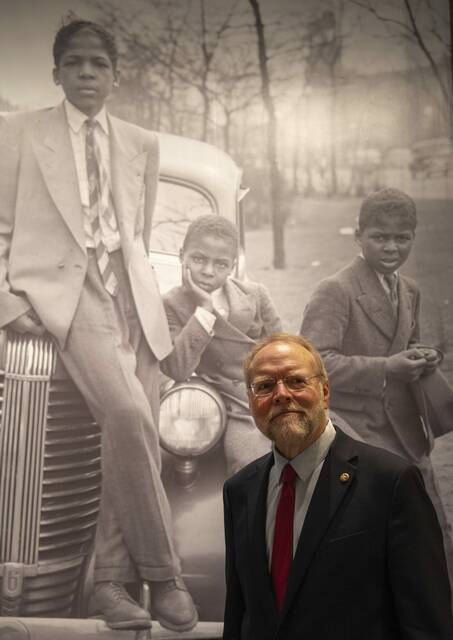
There is an interactive dimension and photographs from the history center’s Detre Library & Archives and the Charles “Teenie” Harris Archive at the Carnegie Museum of Art in Oakland.
Associate curator of African American History at the history center, DaNia Childress said the green book was a great tool. She said the photos tell a big part of the story. Some of those show African Americans loading cars with not only clothing but food in picnic baskets because they often had to eat meals in their cars or along the road.

African Americans overcame challenges, Masich said. He referenced a quote by Aretha Franklin who said, “They were singing down the highway because they knew where to stop.”
“For them it was an expression of freedom, a road trip,” Masich said. “When you look around you see joy.
“It was a horror story of the Jim Crow era and yet the African American people are resilient and innovative and that joy was expressed in travel.”