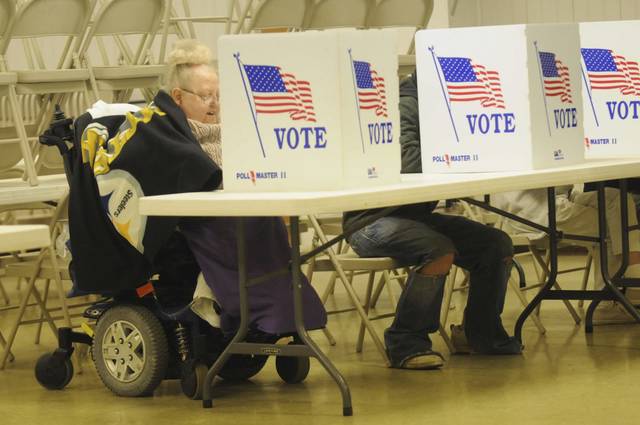
A $400 million federal boost to help cover increased election costs nationwide this year because of the coronavirus pandemic is far less than the actual amount needed, according to a report authored in part by a University of Pittsburgh researcher.
The report, “Ensuring Safe Elections: Federal Funding Needs for State and Local Governments During the Pandemic,” was released Thursday.
It found that Pennsylvania’s anticipated federal grant of $14.2 million will cover less than 18% of the costs of holding safe and secure elections. Pennsylvania was one of five states studied by researchers.
“The state and local governments need a massive infusion of resources,” Christopher Deluzio said in a call with reporters to discuss the report. Deluzio is policy director at the University of Pittsburgh Institute for Cyber Law, Policy, and Security.
“This is a national crisis, and it demands national action,” Deluzio said. “The stakes are far too high to choose inaction.”
The Brennan Center for Justice, R Street Institute and the Alliance for Securing Democracy teamed with Pitt’s Institute for Cyber Law, Policy, and Security to complete the report.
It studied the 2020 election process in Pennsylvania, Georgia, Michigan, Missouri and Ohio.
Those five states will need at least $414 million to cover increased election costs caused by the pandemic. The costs include postage, printing, education and other efforts to hold a safe election.
The federal coronavirus stimulus act included $400 million for all 50 states.
Because of this, the report found that local governments will bear the brunt of the costs. In Pennsylvania, the increased costs are between $79.1 million and $90.1 million for a secure election, according to the report.
It pegged local government costs between $61.6 million and $72.2 million of that total.
The cost to mail, process and count absentee ballots in Pennsylvania is between $36 million and $47 million, according to the report.
Deluzio called the work needed to be done by county election officials in Pennsylvania a Herculean task that presents a “profound challenge to our democracy.”
It’s a challenge that needs to be met, said Paul Rosenzweig, senior fellow of the Washington, D.C.-based R Street Institute.
No one should be forced to choose between staying healthy or exercising their right to vote, Rosenzweig said.
The issue is nonpartisan and needs to be supported by Congress, he said, because elections are the “bedrock of democracy.”
Although it’s costly, it’s worth the money, Rosenzweig said, noting that Americans spend $6 billion a year on toilet paper.
“It’s not a pretty picture,” but it’s important that people know about the report, said David Levine of the Alliance for Securing Democracy.
Pennsylvania’s primary will be held June 2. Before the pandemic, it was to be held April 28.
In Allegheny County, all voters are receiving mail-in ballot forms and the county is working to drastically reduce its in-person precinct locations.
Westmoreland County officials are awaiting guidance from the state before they make any changes. They aren’t sending mail-in applications unless voters request them.