

Editor’s note: ‘What’s That?’ is a recurring feature in the Tribune-Review’s Westmoreland Plus edition. If there’s something you’d like to see explored here, send an email to gtrcity@triblive.com.
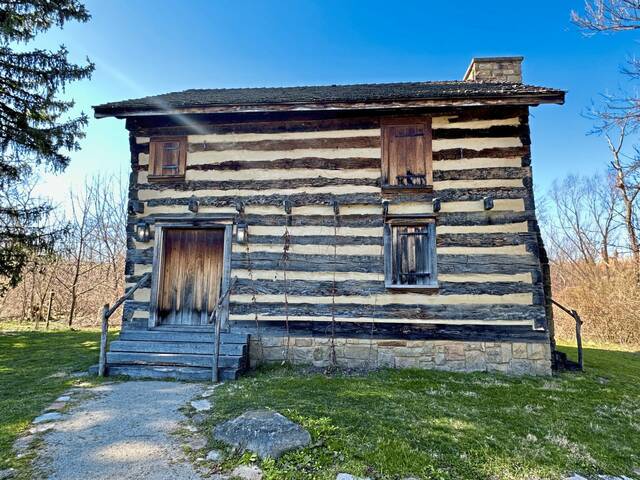
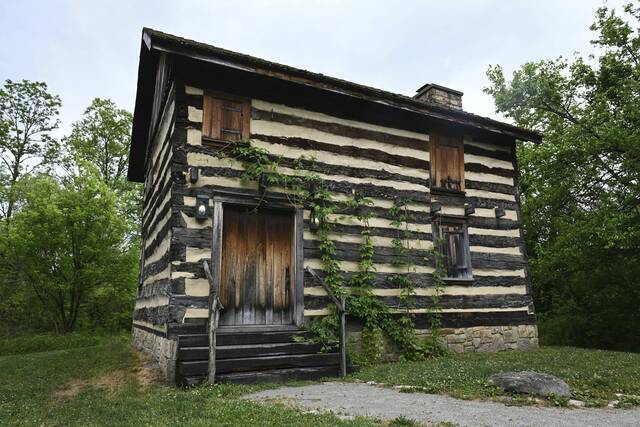
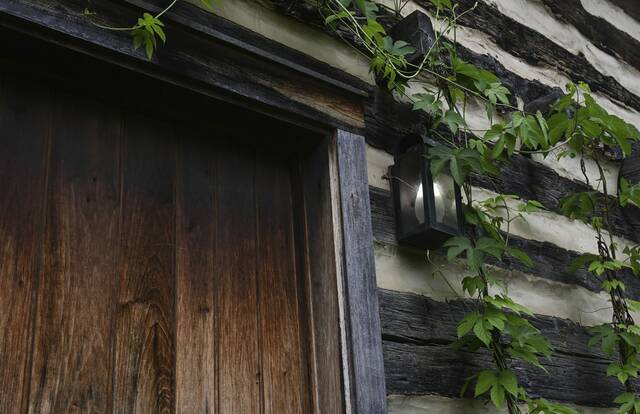
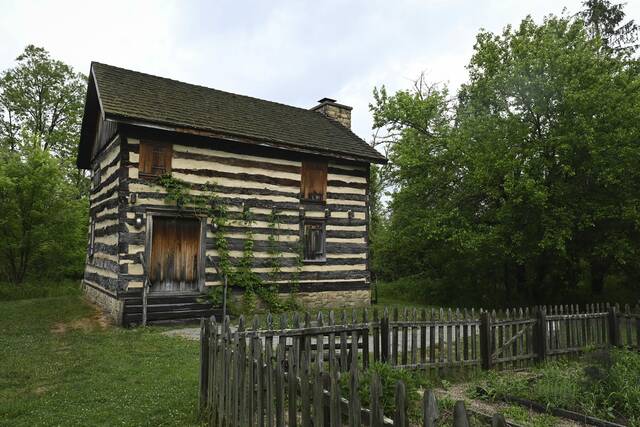
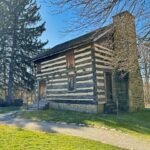
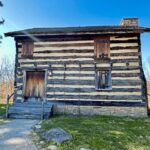
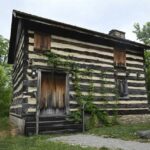
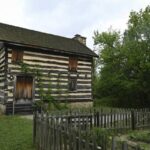
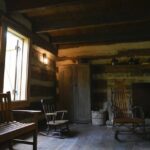
A historic log house awaits visitors at the bend of a tranquil path at the Winnie Palmer Nature Reserve in Unity.
But it wasn’t always a peaceful place. It was quite a busy hub in the late 1700s.
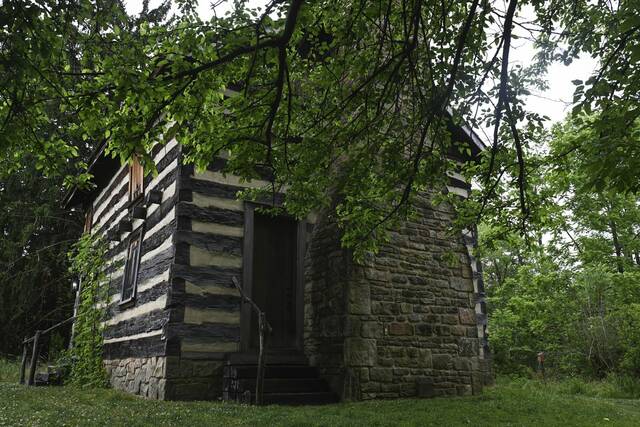
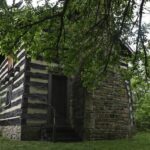
Built in 1780, the Lochry Blockhouse originally was owned by Col. Archibald Lochry. The structure served as a weapons cache, safe haven and home base for settlers in the area. It often housed powder, shot and firearms for use by soldiers and area settlers in the years following the American Revolution.
“It’s a frontier fortification and it was pretty significant in local history,” said Tom Metzgar, a Lochry descendant.
Frontiersmen in the late 1700s were living in a demanding environment and often found themselves engaged in conflict with Native Americans.
When news of the Revolutionary War reached the frontier families in Westmoreland County in 1775, the families developed a regiment to protect themselves against British rule and invasion. Col. John Proctor was elected to lead the county force and Lochry served as lieutenant colonel.
Metzgar said that Lochry traded correspondence many times with the government, which at that time was based in Philadelphia. Metzgar was able to read some of these letters while researching various archives.
“Looking into Lochry’s history kind of became personal after I learned that I was related,” he said.
The government was working to get needed resources to different settlements. Because of rough terrain and poor storage methods, valuable and volatile supplies such as gunpowder would arrive damaged. Lochry built the blockhouse to amass usable weapons and supplies.
There were other blockhouses in the area, perhaps the most well known being the Fort Pitt Blockhouse at Point State Park in Pittsburgh. The structures also served as a protected space where frontiersmen could retreat if they were caught in a conflict.
Lochry did not get to use the blockhouse for long. He died in Indiana in 1781, a year after the structure was built. He was attacked by Native Americans while making a journey with some of his men to meet Gen. George Rogers Clark.
“Had Lochry survived, he probably would have become a figure of frontier times instead of a footnote in frontier history,” Metzgar said.
But Lochry did leave a significant piece of history behind.
“(The blockhouse) is so significant because Lochry provided a tangible connection to the past,” Metzgar said. “You can see little markers and signs all over Pennsylvania, but the Lochry Blockhouse is a physical artifact that people can see and become curious about. The fact that it’s in the Palmer Reserve adds another dimension because it makes the cabin accessible to the public and people can learn about it.”
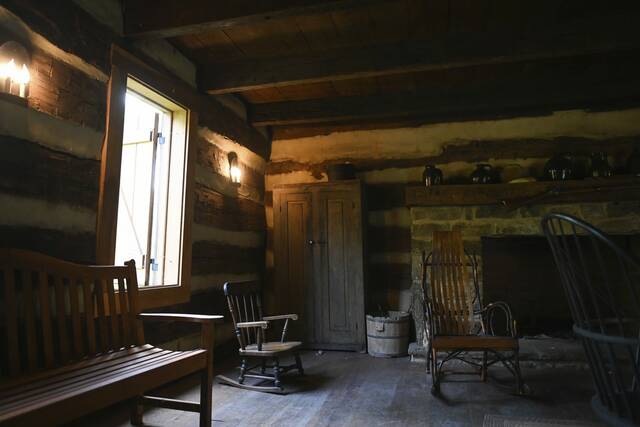
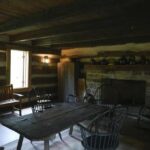
The blockhouse was transformed into a family home during the Great Depression. It was rediscovered between clapboards and interior wall boards in 1999 by the late Floyd Eiseman, a member of the Latrobe Area Historical Society. The society intended to disassemble the building and reconstruct it on Greater Latrobe School District property, but the building and land ultimately were purchased by legendary golf pro and Latrobe-area native Arnold Palmer. He established the Winnie Palmer Nature Reserve there in honor of his wife of 45 years, who died in November 1999.
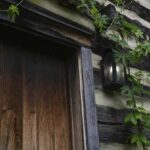
Some of the blockhouse materials are original, while some are modern but historically accurate. Other parts of the structure, such as the stone foundation, were rebuilt to fortify the house.
The building’s reconstruction became a community project when Bob Reintgen, then a social studies teacher at Derry Area High School, spearheaded an effort to enlist student volunteers from the area to provide some of the needed manpower.
Since the blockhouse’s reconstruction, it has been augmented by a colonial garden featuring vegetables and ornamental plants that would have existed in the Pennsylvania frontier and were used for cooking or medicine. The cabin serves as the focal point for the reserve’s annual Fall Fest.
The 50-acre reserve includes native landscapes, trails, meadows, gardens, an Environmental Learning Barn, play spaces, a pond and wetlands.
The nature reserve is located at 744 Walzer Way, between Route 981 and the Saint Vincent College campus.