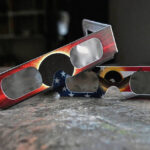
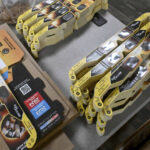
Though it may be tempting to sneak a peek, guidance from health officials is clear: It’s not safe to view the April 8 solar eclipse without proper eye protection.
The Pittsburgh region will experience a partial solar eclipse, with 95% totality at the peak about 3:15 p.m. Those to the north in Erie will see a total solar eclipse.
In either area as well as across the world, UV rays from the sun will hurt your eyes if you look directly at the eclipse, said Dr. Sarah Zambotti, an Allegheny Health Network optometrist.
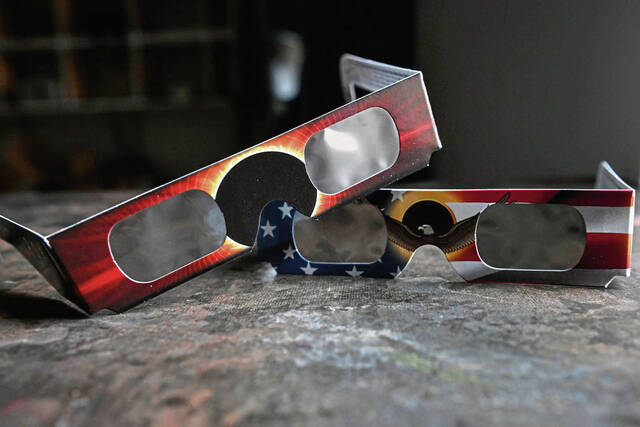
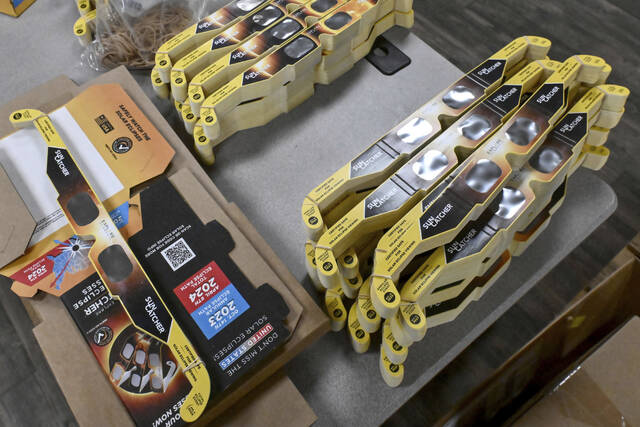
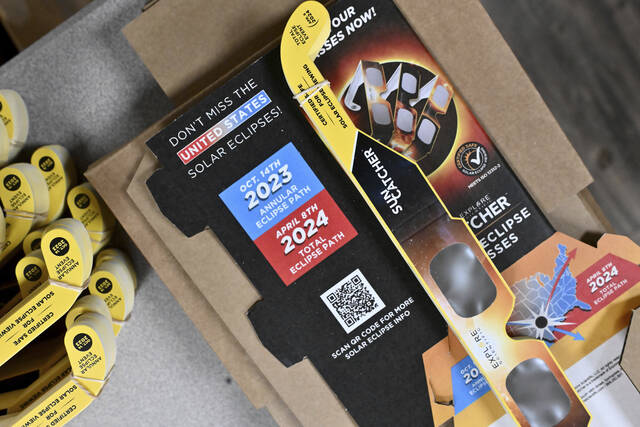
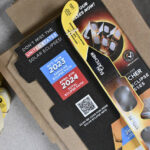
Those interested in seeing the eclipse should use protective eclipse glasses that are supported by the American Astronomical Society. Looking for a quick second without eclipse glasses, or while using ordinary sunglasses, won’t be enough to avoid potential injury, she said.
“I think the biggest misconception is that you can look at it with your bare eyes, or you can look at it for a second and look away,” she said. “It is really dangerous for you to look with your bare eyes.”
Solar retinopathy, a type of eye damage that can be brought on by looking at the sun during an eclipse, can lead to permanent vision loss, said Dr. Carol Fox, chief medical officer at Independence Health System.
“When you look directly at the sun, it can hit your retina and can cause permanent damage,” Fox said. “It inflames or can essentially burn the retina.”
Symptoms of solar retinopathy can include blurry vision, headaches, a blind spot in the center of your vision, increased light sensitivity, distorted vision and changes in the way you see color, according to the American Academy of Ophthalmology.
If you think you have injured your eyes by looking at the eclipse, you should call your eye doctor, Zambotti said. Symptoms can sometimes be delayed for 30 minutes or up to 24 hours.
“If you are starting to have different symptoms, or you are noticing your eyes are blurry, painful, red or irritated, or you have missing vision in the center of your vision, obviously call your eye doctor right away,” Zambotti said. “Luckily, the damage usually can heal over time, but if it’s long enough or the damage is extensive enough, it can be permanent vision changes.”
Looking at the eclipse without proper glasses through a camera or phone camera isn’t a good idea, either, she said.
“You don’t just want to put your phone up in that direction. Naturally, you’re going to be facing your camera in the direction of the sun,” she said. “Not only are you probably still seeing those sun rays, but through the phone camera and on the screen, (it) can still be damaging.”
People with preexisting eye conditions may want to avoid looking at the eclipse altogether, even with glasses.
“That doesn’t mean they can’t be outside, and enjoy it getting dark, but I just wouldn’t look at the eclipse,” she said.
Fox advised people to be careful if they are driving or walking outdoors during the eclipse. Other drivers may be distracted, and it may be jarring to be on the road when it gets dark in the middle of the day.
“In and of itself, it’s not that there’s something about it. Your car’s going to work fine. It’s not going to affect the way the roads are, other than there’s more of a risk with problems with other drivers,” she said. “When it gets to that total darkness phase, if you’re somewhere where there isn’t any other ambient lighting, it can be difficult to see.”
The AAS maintains a list of reputable vendors for purchasing eclipse glasses at eclipse.aas.org.